Quiet Is the New Currency: How America's Top Earners Turned Silence Into a Status Symbol
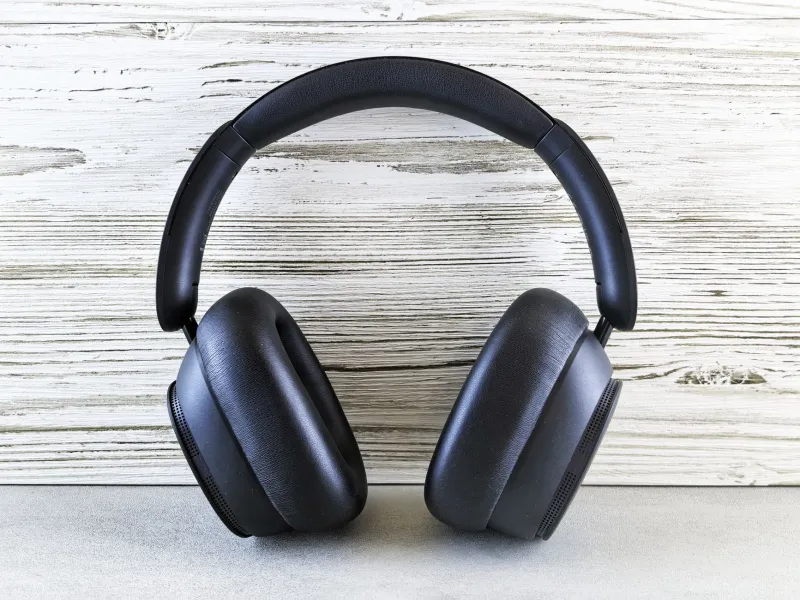
There's a particular kind of flex happening right now, and it doesn't involve a sports car or a corner office. It's quieter than that. Much quieter.
Across the country, a segment of high-earning professionals — tech executives, surgeons, attorneys, creative directors — is spending real money on something most of us take for granted: the ability to simply not be bombarded by sound. We're talking premium noise-canceling headphones that run $400 a pop, private acoustic pods in co-working spaces, dedicated home office builds with soundproofing panels, and yes, actual retreat programs where the entire selling point is that nobody talks to you for three days.
It sounds almost absurd until you dig into the neuroscience. Then it starts to make a lot of sense.
Your Brain on Noise (Spoiler: It's Not Pretty)
Here's what the research has been telling us for years, even if the broader culture hasn't quite caught up. Chronic background noise — the kind you get in a typical open-plan office, a busy apartment building, or a coffee shop with bad acoustics — doesn't just feel annoying. It actively degrades cognitive performance.
Studies out of Cornell and the University of Michigan have shown that exposure to unpredictable noise elevates cortisol levels, fragments attention, and impairs working memory. The brain isn't designed to ignore sound the way it can tune out visual clutter. Auditory processing is deeply tied to our threat-detection systems — ancient wiring that evolved to notice rustling in the bushes, not to filter out Karen's speakerphone call three desks over.
The result? Every time your environment throws unexpected sound at you, your brain burns a little cognitive fuel responding to it. Over the course of a workday, that adds up. Focus erodes. Decision quality slips. Creative thinking — the kind that requires holding multiple ideas in mind simultaneously — becomes genuinely harder.
For someone whose income depends on sharp thinking, that's not an abstract concern. It's a competitive disadvantage.
The Quiet Economy Is Real and Growing
The market has noticed. Noise-canceling headphone sales in the US have grown dramatically over the past five years, with premium models from Sony and Bose becoming almost as common in first-class cabins as laptops. But that's just the consumer end of a much bigger shift.
Look at what's happening in commercial real estate. Acoustic design — once an afterthought — is now a serious selling point for high-end office leases. Buildings are marketing their sound isolation specs the way they used to market views. Private phone pods and soundproofed focus rooms are standard features in offices catering to finance, law, and tech.
And then there's the retreat industry. "Silent retreats" — programs rooted in contemplative traditions but increasingly repackaged for the secular professional set — are booming. Places like the Esalen Institute in Big Sur or boutique wellness resorts in Vermont and Colorado are filling weekend programs where the entire premise is disconnecting from auditory stimulation. Some of these weekends run $1,500 or more per person. They're not struggling to fill spots.
The Status Angle Nobody Talks About
Here's where it gets sociologically interesting. For most of human history, noise was actually associated with prosperity. A busy, loud household meant servants, activity, children, commerce. Silence was for monks and the very poor.
That equation has quietly flipped — pun intended.
In the modern knowledge economy, your ability to command silence signals something important: that you have enough control over your environment, your schedule, and your resources to opt out of the noise. You're not at the mercy of a loud call center floor or a chaotic shared apartment. You can close the door, literally and figuratively.
It's the same dynamic that explains why wealthy people now favor minimalist design over maximalist display, or why "quiet luxury" became a fashion trend. When everyone has access to noise and stimulation — when your phone ensures you're never more than a tap away from infinite content — the rare thing becomes the absence of it.
Quiet, in 2024 America, is what you get when you've made it.
So What Do They Actually Know That You Don't?
The honest answer is that most high earners who've invested in acoustic control didn't arrive there through some grand philosophical awakening. They got there through trial and error — through noticing that their best work happened in certain conditions and their worst happened in others.
What they've internalized, often before the science became mainstream, is that attention is a finite resource. Every interruption, every ambient noise spike, every unexpected sound is a small withdrawal from that account. Managing your environment isn't a luxury in the soft sense — it's a performance variable in the same category as sleep quality or nutrition.
The practical implications of this are actually pretty accessible, even if you're not in the market for a $4,000 soundproofed home office build. Research consistently shows that even simple interventions — a decent pair of noise-canceling headphones, a consistent "deep work" block in your calendar, choosing your workspace deliberately rather than defaulting to whatever's convenient — can meaningfully improve focus and output.
The gap between what the high-earner crowd is doing and what's available to everyone else is narrower than the price tags suggest. A lot of it is just intentionality: treating your acoustic environment as something worth thinking about, rather than something that just happens to you.
The Deeper Point
There's something worth sitting with here beyond the career optimization angle. We live in a cultural moment that is deeply suspicious of stillness. Silence feels uncomfortable. Productivity culture tells us that every moment should be filled, every commute optimized with a podcast, every workout soundtracked. The idea of doing nothing — or more precisely, hearing nothing — can feel almost transgressive.
But the people paying a premium to access that state aren't doing it because they're afraid of the world. They're doing it because they've discovered, often the hard way, that the world gets a lot clearer when you turn the volume down.
The silence premium isn't really about money. It's about recognizing that your attention has value — and that protecting it is one of the smartest investments you can make.
