Why Your Brain Secretly Loves Being Bored (And What You're Stealing From It)
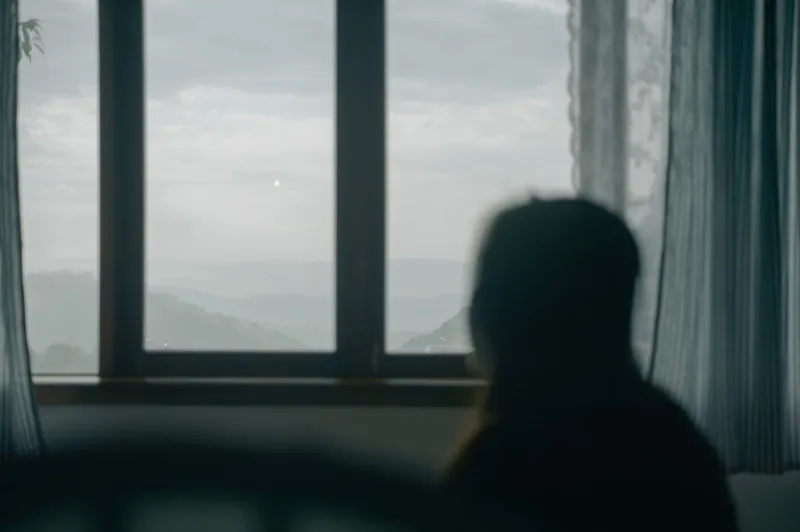
Somewhere between the third podcast episode of your morning commute and the Instagram scroll that replaced what used to be staring out a window, something got lost. Not dramatically. Not all at once. Just quietly, the way a habit fades when you replace it with something shinier.
What got lost was friction. The good kind.
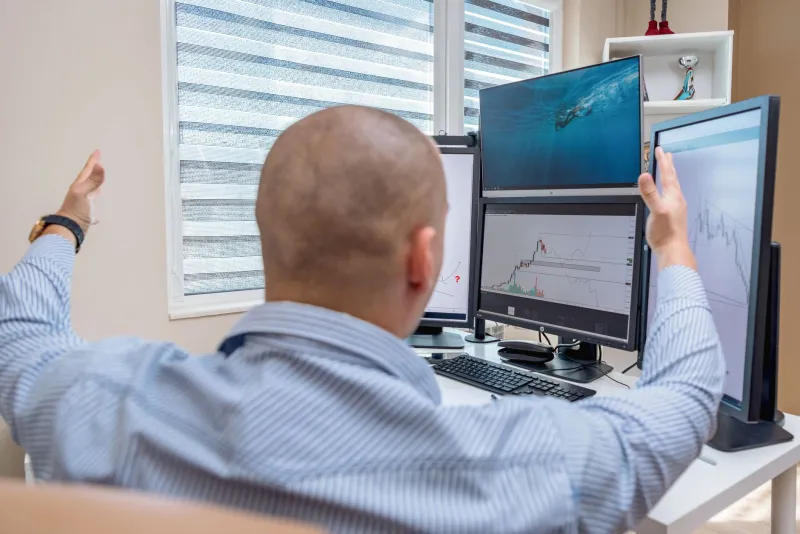
We've spent the better part of a decade treating boredom like a malfunction — a gap in the schedule that needs to be patched immediately with content, noise, or stimulation. Got two minutes waiting for coffee? Open Twitter. Lying in bed before sleep? Queue up a show. Eating lunch alone? Put on something, anything, just don't sit there.
But researchers studying the brain's default mode network are starting to push back on all that patching. And what they're finding is a little inconvenient for anyone who's proud of their productivity playlist.
What Actually Happens When Nothing Happens
The default mode network — the part of your brain that activates when you're not focused on a task — used to get a pretty bad reputation. Scientists initially wrote it off as background noise, the mental equivalent of a screen saver. Then they started looking closer.
It turns out that when your brain goes into idle mode, it doesn't actually go idle. It starts connecting things. Old memories surface and brush up against recent experiences. Half-formed ideas find each other. Problems you weren't consciously trying to solve suddenly have solutions. This is the neurological machinery behind the classic shower epiphany, the idea that hits you on a walk, the answer that arrives at 2 a.m. for no apparent reason.
The catch? The default mode network needs genuine downtime to do this work. Not passive entertainment — actual, unoccupied mental space. And that's exactly what we've been systematically eliminating.
"We've essentially outsourced our daydreaming to our devices," says the broader argument coming out of cognitive science circles. "And daydreaming, it turns out, is where a lot of the generative thinking lives."
The Stimulation Tax
Here's the part nobody really talks about: constant stimulation doesn't just fill the gaps — it exhausts the system. Every podcast, every notification, every autoplay video pulls on the same attention resources your brain uses to do its deeper work. You end up cognitively full without being cognitively nourished.
Think of it like eating. You can eat constantly and still be malnourished if everything you're consuming is empty calories. The brain equivalent of junk food is passive, low-demand content — the kind that keeps you engaged enough to not feel bored but doesn't actually ask anything of you.
And the more you feed it that way, the harder it becomes to tolerate the alternative. People who've spent years filling every quiet moment report that sitting with genuine silence feels genuinely uncomfortable now. That discomfort? That's the friction we've lost the ability to sit with.
People Are Deliberately Bringing Tedium Back
Something interesting is happening in pockets of American culture. A growing number of people — not monks, not minimalists, just regular folks — are starting to reintroduce deliberate boredom into their days. Not as a punishment. As a practice.
The specifics vary. Some people are doing long commutes without headphones — not occasionally, but as a rule. Others are reinstating the screen-free dinner, not just for kids but for themselves. Some are taking walks without a destination or a playlist, just walking, which sounds absurdly simple until you try it and realize how restless it makes you feel for the first fifteen minutes.
One writer in Brooklyn described it as "letting the pressure build." She stopped listening to anything during her subway rides and noticed that by the time she got to her desk, she already had ideas she hadn't had the day before. Not because the commute was inspiring. Because her brain had been left alone long enough to do something with what it already had.
That's the mechanism. It's not about the boredom itself — it's about what boredom enables. The creative output isn't born from the tedium; it's born from what the mind does when it's no longer being managed.
The Creativity Debt We're Running Up
There's a longer-term concern underneath all of this, and it's worth naming. If the capacity for generative thinking is something that atrophies without practice — and there's decent evidence suggesting it is — then years of constant stimulation may be quietly running up a creativity debt that's hard to see until you need to cash out.
This shows up in subtle ways. The feeling of staring at a blank document and having nothing. The sense that all your ideas feel recycled. The inability to think through a complex problem without immediately reaching for someone else's framework. These aren't signs of low intelligence. They may be signs of a brain that hasn't had enough time in the unstructured space where original thinking actually happens.
The irony is sharp: we consume more content about creativity, innovation, and original thinking than any previous generation. And we're doing it at the exact cost of the mental conditions that produce those things.
So What Do You Actually Do With This?
You don't have to go full Thoreau. Nobody's asking you to cancel your subscriptions or stare at a wall for an hour a day (though if you try it, you might be surprised). The reintroduction of boredom doesn't have to be dramatic.
Start with one transition. The drive to work. The walk to lunch. The ten minutes before you fall asleep. Pick one slot and leave it empty. Not for meditation, not for journaling, not for anything productive. Just empty.
The discomfort you feel is real. It's also the signal that something's working. Your brain is remembering how to be bored — and if the research holds, that's exactly where the interesting stuff starts happening again.
Boredom isn't a bug in the human operating system. It might be one of the most underutilized features we've got.